

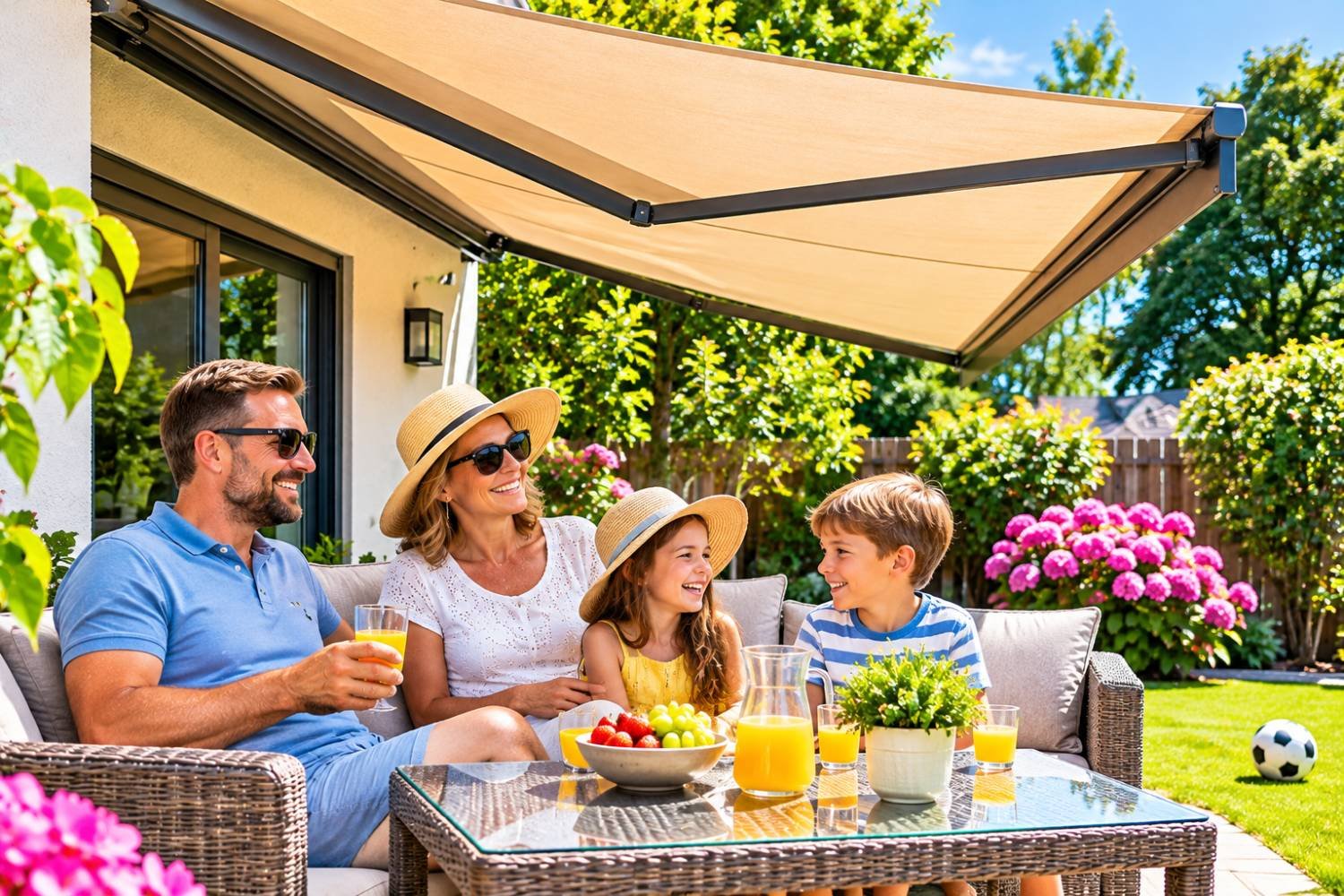
Spending time outside is one of the simple pleasures of home life. Fresh air, room for children to play and space to gather with family all matter. Yet the sun’s ultraviolet rays remain strong in the UK from mid-March to mid-October, even on cooler or cloudy days, and the risk of skin damage is highest between 11am and 3pm.
Creating reliable shade is therefore one of the most practical steps you can take. Natural features, temporary covers and permanent structures all play a part. Among the flexible solutions available, garden awnings stand out because they can be adjusted to match the weather and the way your family uses the space.
Why Shade Matters for Family Sun Safety
Ultraviolet radiation can damage skin cells and increase the long-term risk of skin cancer. Children and babies are especially vulnerable because their skin is thinner and they often spend longer periods outdoors. Health guidance consistently recommends keeping babies under six months out of direct strong sunlight and ensuring older children spend the middle of the day in shade whenever possible.
Shade does more than reduce UV exposure. It also lowers surface temperatures on patios and decking, making outdoor areas more comfortable and safer for bare feet or outdoor play. Good shade supports the other elements of sun safety—protective clothing, wide-brimmed hats and sunscreen of at least SPF 30—rather than replacing them.
Assessing Your Outdoor Space
Start by looking at how sunlight moves across your garden or patio during the day. South- and west-facing areas receive the strongest and longest exposure in the UK. Note where children prefer to play, where seating is placed and whether any existing trees or buildings already cast useful shadows.
Consider the needs of different family members. Young children may need open ground for running and games, while adults often want a shaded dining or seating zone. Pets benefit from cool spots too. Think about access routes, storage for outdoor toys and how the space is used in different seasons. This simple review helps you choose shade solutions that fit real daily life rather than theoretical ideals.
Practical Options for Adding Shade
Several approaches work well in British gardens. The most useful ones include:
- Mature trees or trained climbers that provide natural, living cover once established.
- Free-standing parasols or shade sails that can be moved or adjusted as needed.
- Fixed structures such as pergolas or permanent canopies for consistent coverage.
- Retractable systems that offer shade on demand and can be withdrawn when the weather changes.
Each option has trade-offs in cost, permanence, maintenance and flexibility. Combining two or more often gives the best result—for example, trees for long-term canopy and a retractable cover for the main seating area.
Choosing Flexible Cover with Garden Awnings
Garden awnings are particularly suited to family outdoor spaces because they can be extended or retracted as conditions change. Quality fabrics are designed to block a high proportion of UV rays while still allowing some filtered light. Many systems are motorised or fitted with sensors that respond to wind, giving extra convenience and protection for the fabric itself.
When selecting an awning, prioritise the ultraviolet protection factor (UPF) of the fabric, the strength of the frame and how easily the unit operates. A well-chosen awning can shade a patio dining table, a play area or the doors leading from the house, reducing both direct sun and reflected glare. Because the cover can be withdrawn, the same space remains open to the sky on cooler or overcast days.
Installation usually involves fixing the unit to a suitable wall or supporting structure. Professional fitting helps ensure the awning is level, secure and correctly tensioned. In most cases a retractable awning attached to a house falls under permitted development, but it is always wise to check with the local planning authority if the property is listed, in a conservation area or subject to other restrictions.
Key Factors to Weigh Before You Decide
Durability matters in the British climate. Look for materials that resist fading, mildew and corrosion. Consider how the shade will perform in wind and rain—retractable designs can be stored away during storms, which protects both the fabric and the mechanism.
Think about the full household. Low-level play areas need clear sightlines for supervision. Older relatives may appreciate easy-to-operate controls or remote systems. Storage for cushions and toys should remain accessible once the shade is in place. Maintenance is usually straightforward: regular gentle cleaning with mild detergent and water keeps the fabric in good condition, and periodic checks of moving parts prevent small issues from becoming larger ones.
Budget, timescale and the appearance of the finished space also influence the choice. A permanent structure may suit a long-term garden redesign, while a retractable option offers a quicker route to usable shade without major building work.
Combining Shade with Everyday Habits
Even the best shaded area works best alongside other simple habits. Dress children in lightweight, closely woven clothing and wide-brimmed hats. Apply sunscreen to any exposed skin and reapply as directed. Provide water and encourage regular breaks indoors during the hottest part of the day. Check the UV index on a weather app; when it reaches 3 or higher, protection becomes more important.
Shade should never feel like a barrier to outdoor enjoyment. The goal is simply to make the garden or patio a place the whole family can use safely and comfortably for longer periods.
FAQs
How effective is shade at reducing UV exposure?
Proper shade that blocks both direct sunlight and a large portion of the open sky can substantially lower UV exposure. Health organisations recommend it as one of the three core sun-safety measures alongside clothing and sunscreen. The quality of the material and the coverage area both influence the level of protection.
Do I need planning permission for an outdoor shade structure?
Many retractable awnings and modest free-standing covers fall under permitted development when attached to a house or placed in the garden within height and size limits. Listed buildings, conservation areas and properties with restricted rights usually require checks with the local planning authority.
What should I look for in fabric used for outdoor shade?
Choose materials with a high ultraviolet protection factor, ideally UPF 50+, that also resist water, mildew and fading. Solution-dyed acrylics are commonly used because the colour and protective properties are locked into the fibres.
How can I create shade for young children safely?
Keep babies under six months out of direct strong sun. Position play areas under reliable cover, ensure good airflow and avoid any covering that restricts ventilation over prams. Combine physical shade with hats, clothing and appropriate sunscreen for older children.
How much maintenance do shaded outdoor structures need?
Most modern fabric systems need only occasional cleaning with mild soapy water and rinsing. Retractable units should be withdrawn in strong winds or prolonged heavy rain. Periodic inspection of fixings and moving parts helps maintain safe, reliable operation.
Closing Remarks
Creating shaded outdoor spaces is a practical way to protect the whole family while still enjoying the garden. By assessing sunlight patterns, combining natural and built solutions and choosing flexible options such as garden awnings, you can turn a sun-exposed patio into a more usable and safer area for everyday life.
Start with the places your family uses most, prioritise quality materials and proper installation, and keep shade as one part of a wider sun-safety routine. The result is an outdoor space that remains inviting through the warmer months without unnecessary risk.
