

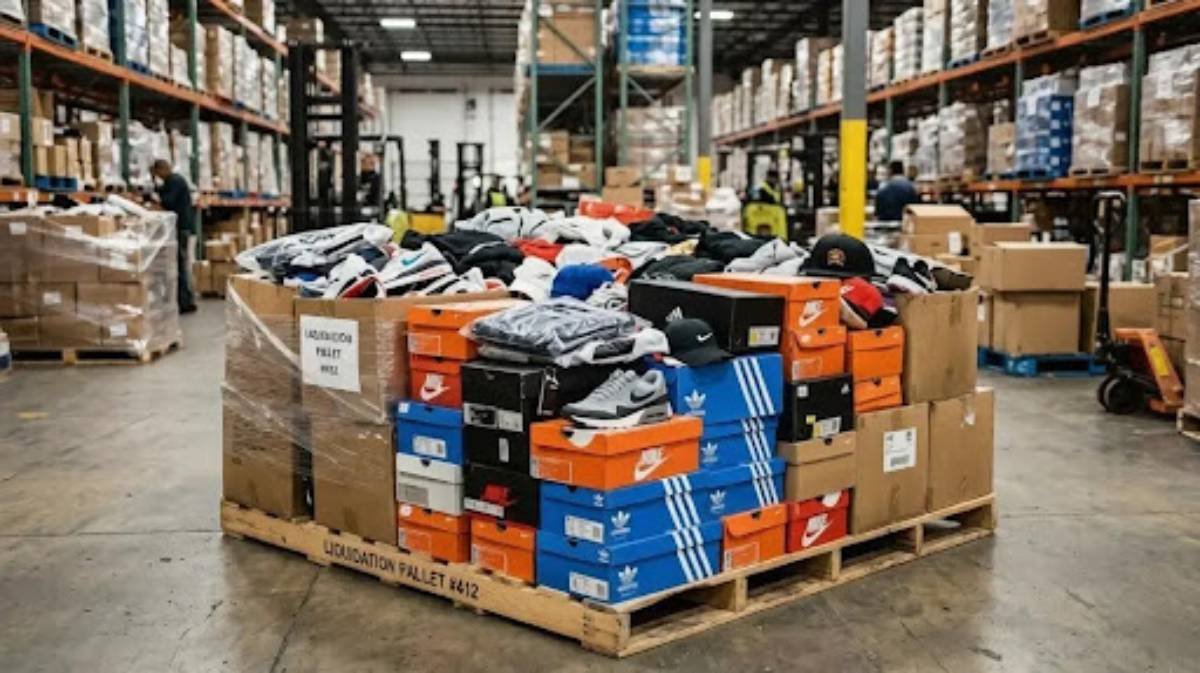
When a major retailer changes its range, yesterday’s display can quickly become tomorrow’s storage problem. Warehouses must make room for incoming products, shops need clear shelves and managers need a way to deal with goods that are no longer priorities. What happens next is less visible than the sale itself, but it supports a network of secondary buyers and smaller businesses.
Where the surplus comes from
Large retailers handle many kinds of stock. Some products are replaced because packaging has changed; others are seasonal, discontinued or simply slower to sell than planned. Store closures and warehouse reorganisations can also release goods. These circumstances do not establish whether every unit is perfect, damaged or suitable for immediate resale. Buyers still need clear information on each consignment.
One route is to group goods into liquidation pallets and offer them to traders who are prepared to handle quantity. That can be more practical for the original business than organising hundreds of individual transactions. The purchaser takes responsibility for transport, sorting and finding outlets, often while accepting less certainty than they would with a standard wholesale order.
Who is equipped to buy?
An online seller may know how to list small branded household products efficiently. A local clearance shop might specialise in bulky bargains, while a repair business could be interested in goods that need attention. These businesses have different costs and capabilities.
Before ordering, the buyer should establish whether the goods are identified individually, graded broadly or sold without checks. Packaging condition and product condition are separate questions. A sealed shipping carton might hold dented retail boxes, while a scuffed exterior may protect a perfectly usable item. Neither assumption is safe without evidence.
The work after delivery
Once liquidation pallets arrive, staff may have to count it, separate categories, check for safety issues and decide how each product will be described. Some goods can be photographed in groups; others demand individual measurements or testing. Lost components, incorrect labels and damaged units must be handled appropriately.
Storage can turn into a hidden expense. Different products require different handling arrangements, and a crowded workspace makes errors more likely. Businesses should plan for unloading equipment, safe stacking and stock records before committing to large volumes. Particularly with liquidation pallets, the price on the invoice is only the start of the spending decision.
The responsibility of the second seller
A trader supplying goods to consumers must consider applicable product safety and consumer protection requirements. It is not enough to say an item came from a large retailer. Electrical items, cosmetics and children’s products can raise different concerns. Where condition or compliance cannot be established, selling should wait until suitable checks are completed.
Clear listings matter too. Customers need to know about faults, missing accessories and other material details. Fair descriptions may reduce disputes and help the seller choose appropriate prices. Keeping purchase records and identifying batches can also prove useful if a product problem emerges after sale.
A supply chain, not a shortcut
The secondary market exists because the needs of a large chain and a small reseller can differ. One needs speed and space; the other may have time to find individual buyers. But neither side creates value merely by moving boxes. The real work is matching usable goods to demand while accounting for safety, condition and handling costs.
For instance, a retailer might release several related kitchen accessories after a packaging refresh. A secondary seller can create a clear listing for each design and offer customers practical information on size and compatibility. But if the packaging omits important instructions or product identification, the reseller needs to resolve that problem before offering the goods to the public.
When retail giants clear shelves, the goods can travel through warehouses, traders and independent shops before reaching a final home. The opportunity is strongest for buyers who understand the journey after purchase, not simply the apparent bargain at the beginning.
