

Understanding Investment Casting in Modern Manufacturing
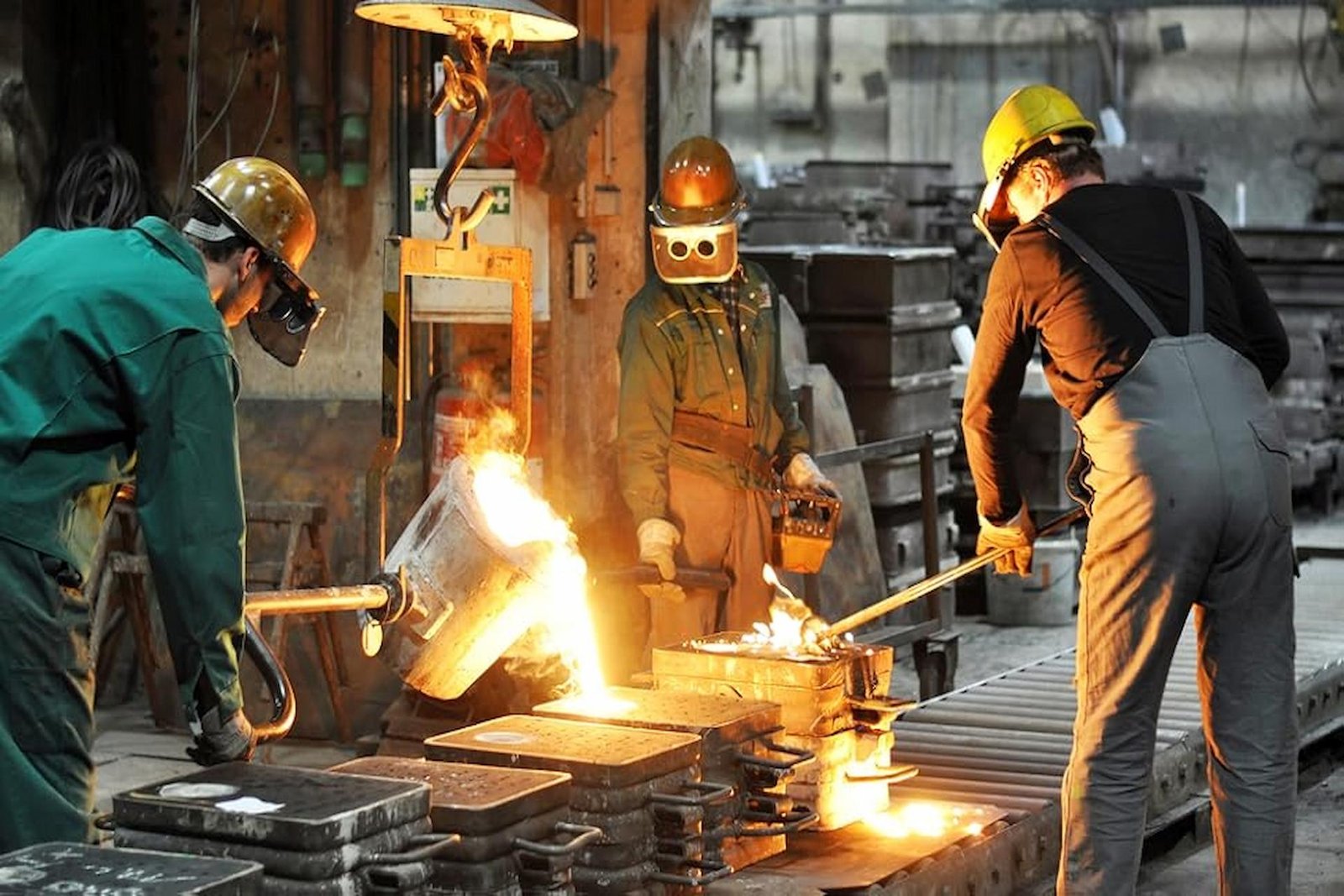
Investment Casting is a precision metal manufacturing process that produces complex shapes with high accuracy. It begins with a wax pattern that replicates the final part. This pattern is coated with ceramic layers to form a strong shell. Once the wax is removed, molten metal is poured into the cavity. After cooling, the shell is broken away to reveal the finished component.
What makes this process valuable today is its ability to deliver intricate geometries that other methods struggle to achieve. Thin walls, fine details, and internal features can be produced in a single step. This reduces the need for multiple operations. It also improves dimensional accuracy.
Modern manufacturing increasingly demands compact, lightweight, and high-performance parts. Investment casting supports these requirements while maintaining consistent quality. It is widely used across aerospace, automotive, medical, and industrial sectors. As product designs become more complex, this process remains critical to meeting functional and performance expectations.
Precision and Design Freedom for Complex Components
One of the most substantial benefits of Investment Casting is design flexibility. Simple shapes or straight lines do not limit engineers. Complex curves, hollow sections, and fine features can be produced without assembly. This allows designers to optimize parts for performance rather than manufacturing limitations.
Precision is another significant advantage. Tight tolerances can be achieved repeatedly across production runs. This consistency reduces fitting issues during assembly. It also improves reliability in real-world applications. For industries where failure is not an option, precision manufacturing is essential.
Near-net-shape production is especially valuable. Parts emerge close to their final dimensions. Minimal machining is required. This saves time and reduces material waste. Reduced cutting also preserves the metal’s strength.
As industries push toward lighter, stronger designs, the ability to combine complexity with precision is increasingly essential. Investment casting supports innovation while maintaining dependable manufacturing outcomes.
Advanced Materials and Improved Performance
Recent developments in material science have expanded the capabilities of Investment Casting. A wide range of alloys can now be cast with high accuracy. These include stainless steel, aluminum alloys, titanium, and high-temperature superalloys. Each material serves specific performance needs.
High-temperature alloys are commonly used in aerospace and energy applications. These materials must withstand extreme heat and pressure. Investment casting allows these alloys to be shaped without compromising their mechanical properties. This ensures durability under demanding conditions.
Surface quality is another key benefit: cast components often have smooth finishes directly from the mold. This reduces the need for extensive surface treatments. Improved surface integrity also enhances fatigue resistance and corrosion performance.
Material efficiency is increasingly important in modern manufacturing. Near-net-shape casting reduces scrap rates. Less waste supports sustainability goals. It also lowers overall production costs. These material and performance advantages of investment casting make it a strong choice for advanced industrial applications.
Role of Digital Technology and Process Control
Technology has transformed how Investment Casting is executed today. Computer-aided design tools allow engineers to model components with extreme detail. Simulation software predicts metal flow, cooling behavior, and shrinkage. Potential defects can be identified before production begins.
This digital approach reduces trial runs and development time. It also improves first-time quality. Manufacturers can fine-tune designs and process parameters early. This leads to more consistent results.
Automation has also improved process control. Robotic handling of wax patterns reduces human error. Controlled environments help maintain uniform shell thickness and curing conditions. These factors directly affect casting quality.
Real-time data monitoring is becoming more common. Key process variables are tracked and adjusted as needed. This data-driven approach supports continuous improvement. It also helps manufacturers meet stricter industry standards. Together, these technologies enhance reliability and efficiency across the investment casting process.
Industrial Impact and Future Outlook
Investment Casting continues to shape modern industrial production. In aerospace, it supports the use of lightweight components to improve fuel efficiency. In automotive manufacturing, it enables the production of complex parts that reduce vehicle weight and improve performance. Medical device production benefits from accuracy and repeatability.
The process also supports supply chain efficiency. Fewer manufacturing steps reduce lead times. Consistent quality lowers rejection rates. These factors improve overall operational performance.
Looking ahead, demand for complex metal parts is expected to grow. Electric vehicles, renewable energy systems, and advanced machinery all require precision components. Investment casting is well-positioned to meet these needs.
Continued advances in materials, automation, and digital tools will further expand its capabilities. As industries seek efficient and reliable manufacturing solutions, investment casting remains a key method for producing complex metal parts with precision and confidence.
